Portland & Beaverton Housing Market Update | October 2026

Portland & Beaverton Real Estate Market Update: Why the Year-End Slowdown Creates Opportunity for Buyers
October 2026 Market Update | Carey Hughes Homes
The seasonal slowdown is officially underway in the Portland metro real estate market. Fewer homes are selling, fewer new listings are coming onto the market, and buyers who are willing to look beyond the traditional spring buying season may have an opportunity to negotiate more favorable terms.
But the real advantage isn't simply buying a home in November or December. It's knowing which properties to pursue, which sellers are motivated, and how to put together an offer that works.
Let's take a closer look at October's numbers and what they mean for buyers and sellers heading into the final weeks of 2026.
October 2026 Housing Market: Portland Metro & Beaverton
The latest market data shows a significant decrease in sales activity compared to October 2025, while prices and time on market tell a more nuanced story.
Portland Metro Housing Market
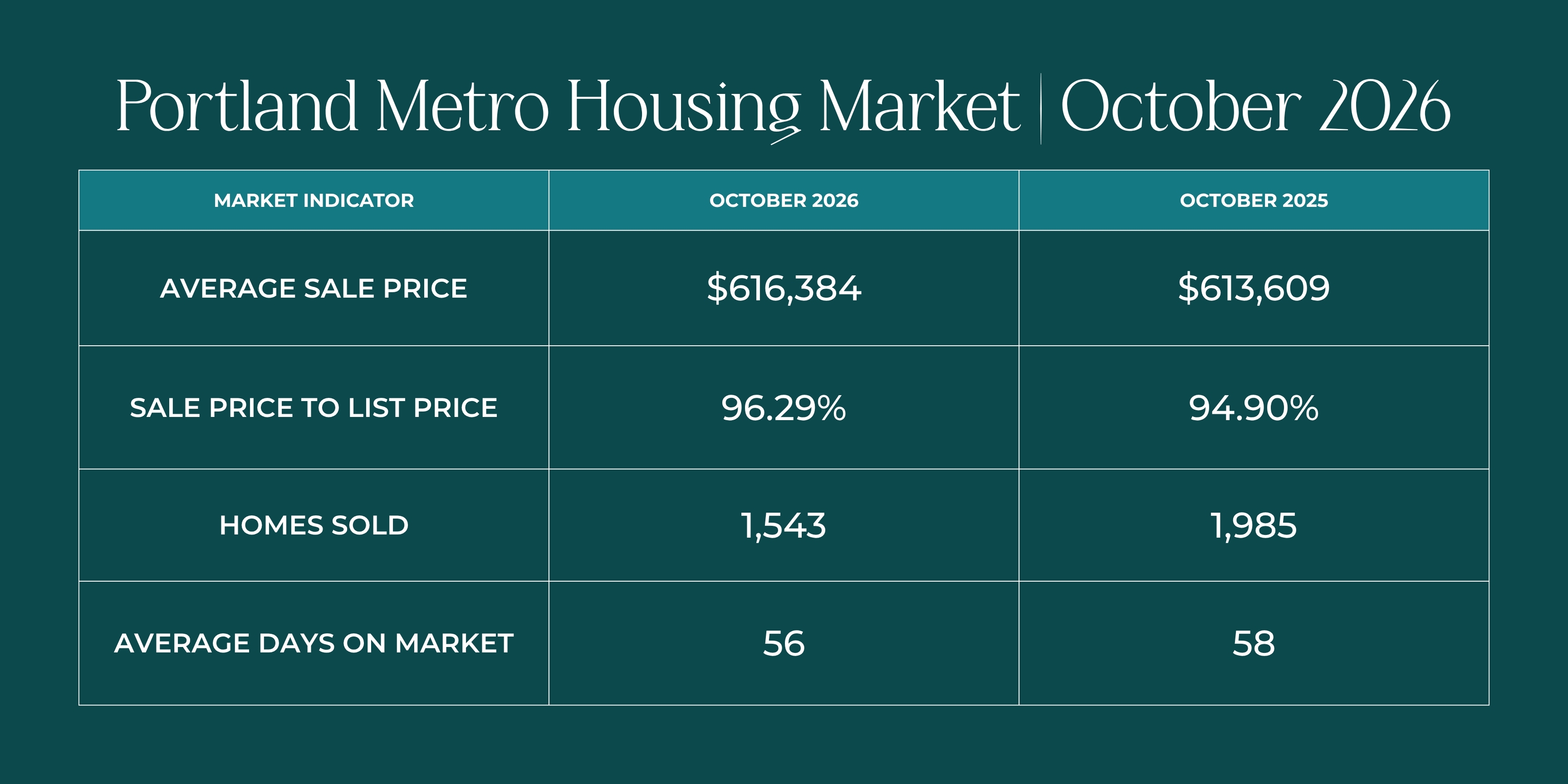
Portland metro home sales declined approximately 22% compared to last October, while the average sale price remained relatively unchanged.
Homes also sold slightly faster on average, and the sale-price-to-list-price ratio increased.
The takeaway? Buyer activity has slowed, but that doesn't mean every seller is struggling to sell. Well-priced, desirable properties can still attract serious interest. The greatest negotiating opportunities are more likely to be found among homes that have been sitting on the market, experienced price reductions, or have sellers with a reason to move.
Beaverton Housing Market
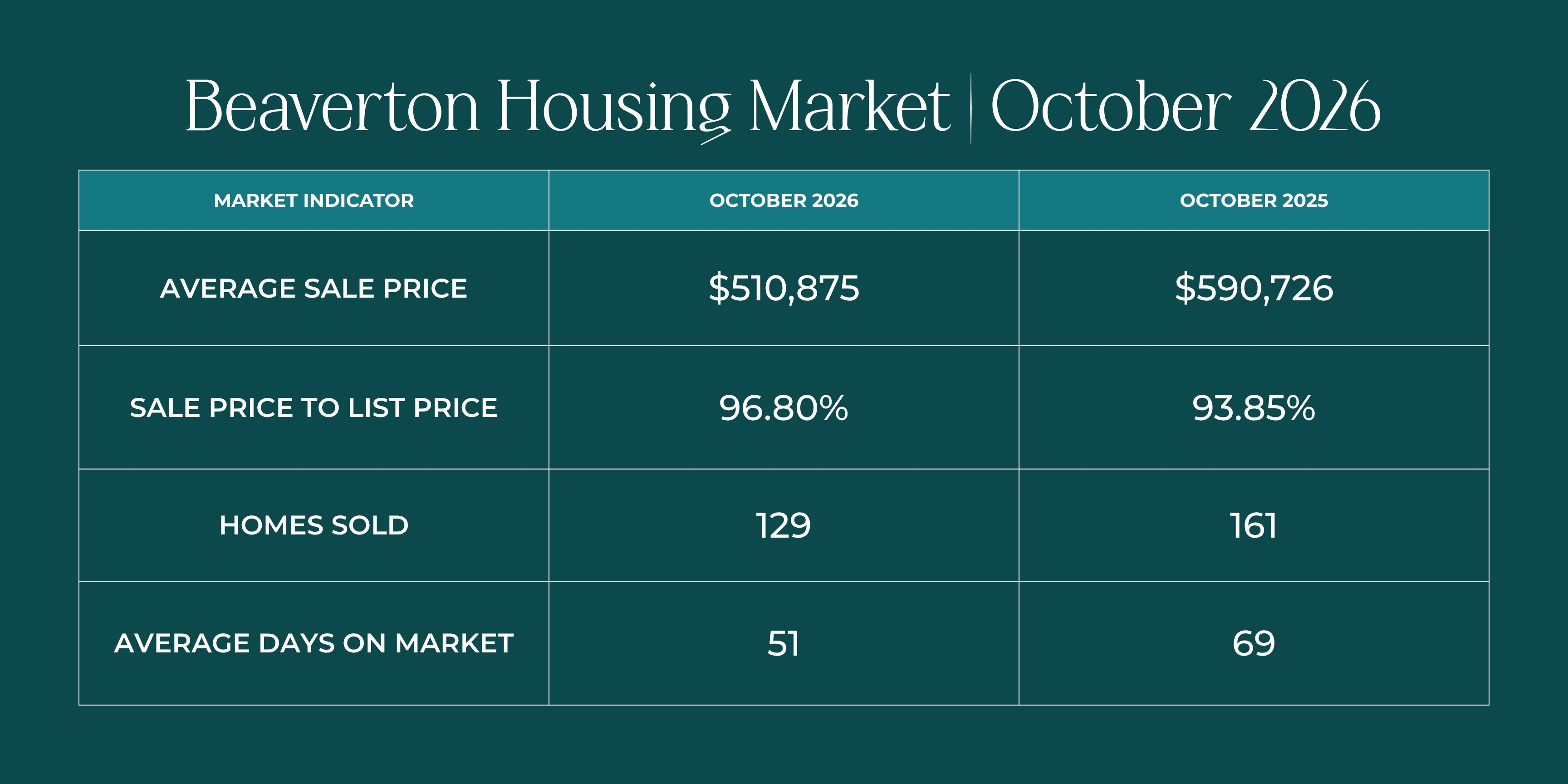
The average sale price declined approximately 14% year over year, and the number of homes sold fell 20%. Yet homes that did sell spent considerably less time on the market, averaging 51 days compared to 69 last October.
This is an important reminder that average sale prices don't tell the entire story. The types, sizes, and price ranges of homes selling in a given month can significantly affect the average.
What we can see is that fewer transactions are taking place, but buyers are still moving forward when they find the right property at the right price.
Why Late Fall and Winter Can Be a Smart Time to Buy a Home
Every year, the Portland real estate market follows a seasonal pattern. Activity generally picks up in the spring and early summer before slowing as we move into fall and winter.
This year, that slowdown is particularly noticeable.
According to the October 2026 RMLS Market Action Report, Portland metro new listings declined 16.5% from September, while pending sales dropped 9.8%. Inventory reached 4.3 months, compared to 3.1 months in October 2025.
And there's another important number: Realtor.com's October housing research found that 31.1% of Portland-area listings experienced a price reduction.
For buyers, these conditions can create an opening.
Sellers who have been on the market for several months may be reconsidering their expectations. Some may want to close before the holidays or the end of the year. Others may be carrying the expense of a vacant property or preparing for a move they've already committed to.
The key is understanding which sellers are motivated and what terms matter most to them.
A reduced asking price isn't necessarily the best deal, and a home that hasn't reduced its price isn't necessarily out of reach. That's why we look beyond the listing.

How We Help Buyers Negotiate a Better Deal in Today's Market
If you're considering buying a home before the end of the year, here's where we recommend focusing your attention.
1. Start With Homes That Have Been on the Market for 60+ Days
Rather than looking exclusively at new listings, identify three to five properties that have been on the market for at least 60 days.
Look closely at their listing histories.
Have they reduced the asking price? How long have they been listed? Are they competitively priced based on recent comparable sales, or are they still holding onto expectations from an earlier market?
Not every home that's been sitting is a good opportunity. But longer market times can give us a reason to investigate further.
2. Understand the Seller's Situation
This is where having an experienced real estate agent makes a difference.
Before writing an offer, we reach out to the listing agent to learn as much as possible about the property and the seller's circumstances.
Are they motivated to sell before the end of the year? Have they received previous offers? Is there a particular closing timeline that would make an offer more appealing?
We also want to understand the home's condition beyond what you can see in the listing photos.
A beautiful kitchen doesn't tell us the age of the roof, the condition of the furnace, or whether there are expensive repairs on the horizon.
These conversations help us determine where there's room to negotiate and which properties are worth pursuing.
3. Negotiate the Terms That Matter Most
A successful negotiation isn't necessarily about asking for everything.
It starts with identifying your priorities.
Depending on the property and your financial situation, that might mean negotiating:
-
A lower purchase price
-
Seller-paid closing costs or credits toward a mortgage rate buydown
-
A significant repair, such as replacing an aging roof before closing
Once we've identified the most important terms, we focus on making the rest of the offer as appealing as possible.
This is a negotiation, not an opportunity to make unreasonable demands of a seller.
A clean, well-structured offer that addresses the seller's concerns can often be more effective than simply submitting the lowest possible number.
4. Make Your Financing and Closing Terms a Strength
Price is important, but sellers also want confidence that a transaction will close.
That's why we work closely with our buyers and their lenders before making an offer.
Having a strong preapproval, verified funds, an appropriate earnest money deposit, and a clear financing plan can make a meaningful difference.
Depending on the situation, a shorter inspection timeline or faster closing may also be appealing, provided those terms work for the buyer and don't create unnecessary risk.
We also encourage direct communication between the lender and listing team when appropriate. A seller who feels confident about the financing and the likelihood of closing may be more willing to consider a lower purchase price.
Our goal is to remove as many objections as possible before the seller has a reason to say no.
Can You Really Negotiate Below Asking Price in Portland Right Now?
Yes, but the amount depends on the property, location, condition, and seller motivation.
In certain areas, we've recently seen offers negotiated approximately 3% to 4% below asking price. And as the seasonal slowdown continues, there may be opportunities to negotiate more aggressively on select properties.
However, it's important not to confuse a lower price with a better investment.
A home priced 5% below market value may offer a better opportunity than a home that's overpriced by 10%, even if the seller agrees to a substantial reduction.
The question isn't simply how far below asking price we can negotiate. It's whether we're purchasing the right property at the right price, with terms that protect your long-term investment.
What Does This Mean for Portland & Beaverton Home Sellers?
For homeowners considering a sale, the takeaway is equally important. Buyer activity is slowing, and pricing expectations matter. Homes that are well-prepared, competitively priced, and strategically marketed can still generate interest, even during the slower months.
But sellers who enter the market at an unrealistic price and expect buyers to negotiate their way down may find themselves facing longer market times and increasingly difficult conversations.
The goal should be to position your home competitively from the beginning, rather than relying on a series of price reductions to generate activity.
And if you're not in a position where you need to sell immediately, understanding current market conditions can help you decide whether listing now or preparing for 2027 makes more sense.
The Bottom Line: Don't Overlook the Year-End Housing Market
The Portland and Beaverton real estate markets are shifting into their slower season, but that doesn't mean opportunities are disappearing. They're simply changing.
For buyers, this may be one of the best times of the year to negotiate, particularly on properties that have been sitting on the market. For sellers, it's a reminder that pricing, preparation, and a well-executed marketing strategy matter more than ever.
Ultimately, there's no one-size-fits-all answer to when you should buy or sell. What matters is understanding the market, recognizing the opportunities in front of you, and making informed decisions that align with your goals.
That's where local experience makes the difference.
At Carey Hughes Homes, we believe good real estate decisions start with good information and an honest conversation. Whether you're hoping to make a move before the end of the year or looking ahead to 2027, we're here to help you understand your options and build a strategy that makes sense for you.
Get to know our team, explore our approach, and connect with us.

Categories
Recent Posts